FHA Loan vs Conventional Loan in California: Which Is Better for Santa Clarita Buyers?
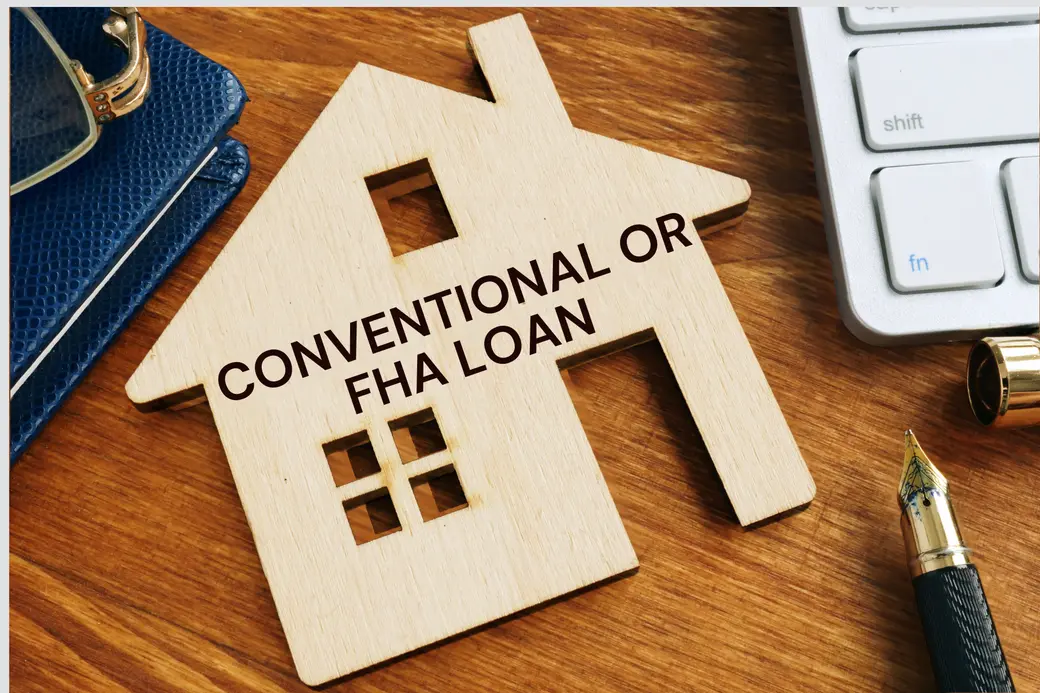
Is an FHA loan or a conventional loan better for buying a home in Santa Clarita, California? It depends on your credit profile, available down payment, monthly budget, and the home you want to buy. FHA loans can offer more flexible qualifying options, while conventional loans may offer advantages with mortgage insurance and long-term costs for eligible borrowers. Comparing both options can help you decide which one fits your finances.
What Is the Difference Between an FHA Loan and a Conventional Loan?
Both FHA and conventional loans can help buyers finance a home, but they have different rules and costs.
An FHA loan is a mortgage made by a private lender and insured by the Federal Housing Administration, a division of the U.S. Department of Housing and Urban Development. This insurance helps lenders manage their risk and allows FHA loans to offer certain flexible qualifying options.
A conventional loan isn't insured by the federal government in the same way. Many conventional mortgages follow guidelines established by Fannie Mae or Freddie Mac, although other conventional loan programs are available.
Neither option is automatically better. The right choice depends on what you qualify for and how the full cost of each loan compares.
FHA vs Conventional Loans at a Glance
|
Feature |
FHA Loan |
Conventional Loan |
|
Minimum down payment |
As low as 3.5% for eligible borrowers |
As low as 3% with certain qualifying programs |
|
Credit requirements |
May offer more flexible qualifying options |
Requirements vary by program and lender |
|
Mortgage insurance |
FHA mortgage insurance is required |
Private mortgage insurance is typically required with less than 20% down |
|
Removing mortgage insurance |
Follows FHA-specific rules |
PMI can generally be canceled when applicable requirements are met |
|
Loan limits |
Limits vary by county and property type |
Conforming loan limits apply to eligible conforming loans |
|
Best comparison point |
Total cost and qualifying flexibility |
Total cost, qualifying flexibility, and potential PMI savings |
These are general features, not a guarantee that you'll qualify for either loan. Program requirements, lender policies, and the property itself can affect your options. Review the official CFPB FHA loan guide and conventional loan guide for additional details.
How Much Do You Need for a Down Payment?
Your down payment affects how much you borrow, how much cash you'll need upfront, and whether mortgage insurance applies.
FHA loans: Down payments as low as 3.5%
Eligible FHA borrowers may qualify with a down payment of 3.5% of the purchase price. This can help buyers who have savings available but aren't ready to make a larger down payment.
For example, on a hypothetical $700,000 home, a 3.5% down payment would be $24,500. That leaves a base loan amount of $675,500 before any financed mortgage insurance or other adjustments.
This example illustrates the math only. It doesn't represent a current Santa Clarita home price, a loan offer, or an estimate of what you'll qualify for.
You'll also need to plan for closing costs, prepaid expenses, and money you want to keep in reserve after buying.
Conventional loans: Some programs allow 3% down
Certain conventional mortgage programs allow eligible borrowers to put down as little as 3%. Requirements differ by program, and some options have first-time buyer, income, occupancy, or other eligibility rules.
A smaller down payment can help you keep more savings available for moving expenses, repairs, and unexpected costs. However, borrowing a larger share of the home's price means you'll generally have a larger loan balance and may pay mortgage insurance.
Don't assume you need 20% down to explore conventional financing. Ask a lender which low-down-payment options are available for your circumstances.
Which Loan Is Easier to Qualify For?
This is one of the biggest questions buyers ask when comparing FHA and conventional financing.
FHA loans can be worth exploring if your credit history or down payment makes conventional qualification more challenging. Conventional loans may work well for borrowers whose credit, income, debts, and savings meet the requirements of the program they're considering.
However, your credit score alone doesn't determine approval.
Lenders may review your income, employment and income history, existing monthly debts, available assets, credit history, and the property's value. They also evaluate whether the proposed mortgage payment fits within applicable underwriting requirements.
A buyer with a strong credit profile might receive a more attractive conventional offer. Another buyer might find that an FHA loan provides a more workable path. Some buyers could qualify for both.
The useful question isn't simply which loan has easier requirements. It's which loan you can qualify for on terms that fit your budget.
Mortgage Insurance: A Major Difference Between FHA and Conventional Loans
Mortgage insurance is worth examining closely because it can affect your monthly payment and the overall cost of your loan.
How FHA mortgage insurance works
FHA loans require mortgage insurance. This generally includes an upfront mortgage insurance premium and an annual premium that's typically paid in monthly installments.
The upfront premium may be financed into the loan if the borrower and loan qualify under FHA rules. Doing so reduces the amount of cash needed to pay that premium at closing, but it increases the loan balance.
How long you'll pay the annual premium depends on factors such as the original loan-to-value ratio and the loan term. Don't assume FHA mortgage insurance will automatically disappear when you reach 20% equity.
How conventional private mortgage insurance works
Conventional loans commonly require private mortgage insurance, or PMI, when the down payment is less than 20% of the purchase price.
PMI costs vary based on factors such as credit, down payment, loan details, and the mortgage insurer's pricing. Eligible borrowers can generally request PMI cancellation when they meet applicable requirements, and federal law provides additional rules for termination.
That potential to remove PMI can make conventional financing attractive to some buyers who start with a smaller down payment.
Still, the absence of FHA-style mortgage insurance doesn't automatically make a conventional loan cheaper. Interest rates, lender fees, and the cost of conventional PMI can change the comparison.
The CFPB explains the differences in its mortgage insurance guide.
Which Loan Has the Lower Monthly Payment?
There's no reliable way to answer that without comparing actual loan offers.
A lower interest rate doesn't necessarily mean a lower total payment. Mortgage insurance, property taxes, homeowners insurance, HOA dues, and other costs can change the monthly amount you'll need.
When comparing FHA and conventional financing, ask the lender to show you:
- The proposed interest rate and whether it's fixed or adjustable.
- The principal and interest payment.
- Any upfront and monthly mortgage insurance.
- Estimated property taxes and homeowners insurance.
- HOA dues, if applicable.
- Estimated closing costs and the total cash needed to close.
Ask for estimates based on the same purchase price, down payment, loan term, and similar rate-lock assumptions. That makes it easier to see the real differences between the offers.
What About Loan Limits in Santa Clarita?
Santa Clarita is in Los Angeles County, so buyers should check the loan limits that apply to the property and financing program they're considering.
FHA loans have county-specific maximum mortgage amounts. Conventional conforming loans also have limits, which vary by year and property type. A conventional loan above the conforming limit may fall into a jumbo or other nonconforming category, depending on the lender and program.
The purchase price isn't necessarily the same as the loan amount. Your down payment and the applicable program rules affect how much you need to finance.
Before making an offer, ask the lender to confirm the applicable loan limit for the property. You can check the official HUD FHA mortgage limits information and the Federal Housing Finance Agency's conforming loan limits.
This is especially important when you're comparing properties at different price points. The loan program that works for one home may not be available for another.
Can You Use an FHA Loan to Buy Any Home?
Not every property will qualify for every loan program.
FHA financing has property standards and appraisal requirements. The home must meet the program's applicable requirements, and the appraisal process evaluates the property for lending purposes.
Conventional loans also have property eligibility and appraisal requirements, which vary by loan program and property type.
If you're considering a home that needs significant repairs, has unusual features, or may present appraisal concerns, ask your lender about eligibility early. A property that looks right for your budget still needs to meet the requirements of the financing you plan to use.
Your lender can explain the applicable rules before you commit to a particular loan.
Which Loan Is Better for First-Time Buyers?
First-time buyers sometimes assume FHA is always the best starting point because of its down payment and qualifying features. Others assume conventional financing is better because PMI may eventually be removed.
Neither assumption tells the whole story.
An FHA loan may be worth comparing if you have a smaller down payment or need more flexibility with qualifying requirements. A conventional loan may be worth comparing if your credit profile is strong, you qualify for a competitive offer, or you want the option of canceling PMI under the applicable rules.
You should also look at how much cash you'll have left after closing. Using most of your savings for a down payment can leave less money for moving, furnishing, maintenance, and unexpected expenses.
The goal is to find a loan that works both on closing day and after you've moved in.
Questions to Ask Before Choosing a Mortgage
Before deciding between FHA and conventional financing, ask your lender to run both scenarios if you're eligible.
Start with these questions:
- What would my total monthly payment be with each loan? Include principal, interest, mortgage insurance, property taxes, and homeowners insurance.
- How much cash would I need at closing? Compare the down payment, lender fees, other closing costs, and any upfront mortgage insurance.
- How long would I pay mortgage insurance? Ask about the specific rules for each loan rather than relying on a general estimate.
- What interest rate and fees are you offering? Request a written Loan Estimate so you can compare the actual terms.
- Are there other loan programs I should consider? Depending on your eligibility, a lender may be able to explain additional options.
You can also request Loan Estimates from more than one lender. The Consumer Financial Protection Bureau recommends comparing offers carefully, including the interest rate, total monthly payment, upfront costs, and cash to close. See its guide to comparing mortgage offers.
FHA Loan vs Conventional Loan: How Santa Clarita Buyers Can Decide
Start with your finances, then look at the property you want to buy.
If your available down payment is limited, compare FHA financing with conventional programs that allow a smaller down payment. If your credit profile is strong, ask whether a conventional offer could provide lower overall costs. If you're considering a higher-priced home, confirm the applicable loan limits before narrowing your options.
Most importantly, compare the full numbers rather than choosing based on the loan name alone. A difference in mortgage insurance, lender fees, or interest rate can change which option makes sense for you.
You don't need to know every mortgage rule before beginning your home search. You do need clear information about what you can afford, what the loan will cost, and how the terms fit your plans.
Planning Your Next Home Purchase in Santa Clarita?
Choosing a mortgage is one part of buying a home. Understanding the local market, identifying properties that fit your needs, and planning your next steps are important parts of the process, too.
Cyndi Lesinski and Associates can help you navigate your home search and understand the real estate side of your purchase. For loan eligibility, rates, and financing advice, speak directly with a qualified mortgage professional.
Cyndi Lesinski 661-510-5516. Broker-Associate and REALTOR®, Cyndi Lesinski and Associates serve in Valencia, Santa Clarita, Castaic, Canyon Country, Newhall, Saugus, Stevenson Ranch, the San Fernando Valley, Los Angeles, Burbank, Glendale, and beyond.
If you're looking for guidance on pricing, preparing your home for the market, understanding your options, or exploring your next purchase, visit Cyndi's Real Estate Support Center for additional resources and tools: Santa Clarita Real Estate Support Center
Categories
Recent Posts