Is It Better to Rent or Buy in Santa Clarita in 2026? A Real Cost Comparison
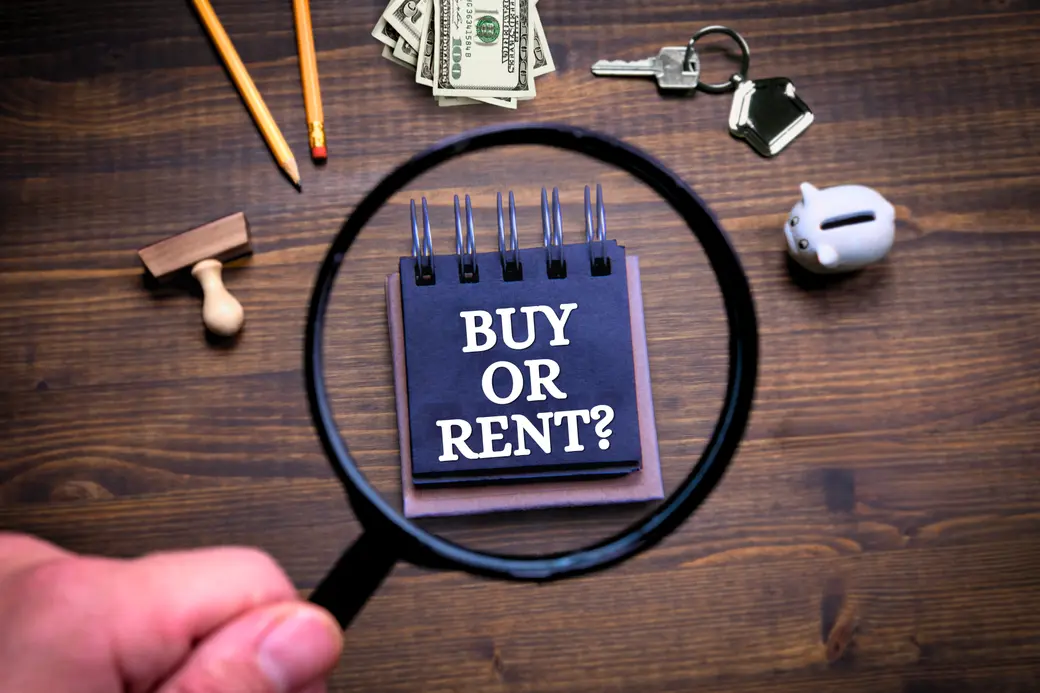
Is it better to rent or buy in Santa Clarita in 2026?
If you're trying to decide whether to rent or buy in Santa Clarita right now, don't compare your rent to a mortgage payment and stop there. In 2026, the real comparison includes the down payment, closing costs, property taxes, insurance, maintenance, mortgage interest, and the equity you may build over time.
The answer can look very different depending on your budget, how long you plan to stay, and the specific home you're comparing.
What does the Santa Clarita housing market look like in 2026?
Santa Clarita's housing market is giving renters and buyers plenty to think about.
Zillow reported a typical Santa Clarita home value of $787,700 as of August 31, 2026, down 0.9% from a year earlier. Zillow also reported a median sale price of $790,000 for July. Realtor.com reported a $775,000 median sold price in August 2026, along with a $774,950 median listing price.
Those numbers aren't identical because the companies use different data and measurement periods. That's important when you're researching the market. There isn't one number that perfectly represents every home in Santa Clarita.
Rental data also varies by source.
Realtor.com reported a $4,000 median monthly rent in August 2026, while Zillow's rental index was lower because it measures asking rents using a different methodology.
So if you're currently paying $3,500 or $4,000 in rent, that doesn't automatically tell you whether buying a $775,000 or $800,000 home would make financial sense.
You need to compare the actual properties and the actual costs.
What does renting really cost?
Renting is often easier on your cash upfront.
You typically don't need a large down payment, and you aren't responsible for every cost associated with owning the property. Your lease determines which expenses you pay and which remain the landlord's responsibility.
Let's use a simple example.
If your rent is $4,000 per month, that's: $48,000 per year in rent.
That doesn't mean you're simply losing $48,000. You're paying for the right to live in the property without taking on the financial responsibility of owning it.
You may also have renters insurance, utilities, parking charges, pet fees, moving expenses, and other costs depending on the property and lease.
The tradeoff is that your rent payments generally don't create ownership equity in the property.
That's one of the biggest differences between renting and buying.
What does buying really cost?
Buying a home involves more than the mortgage payment.
Your monthly ownership costs can include principal and interest, property taxes, homeowners insurance, mortgage insurance if applicable, HOA dues if applicable, and the money you set aside for maintenance and repairs.
The Consumer Financial Protection Bureau notes that a mortgage payment can include principal, interest, mortgage insurance, property taxes, and homeowners insurance. HOA dues can be an additional expense.
That means a home with a $4,000 principal-and-interest payment isn't necessarily a $4,000-per-month home.
You need to look at the complete picture.
Let's compare an $800,000 Santa Clarita home
Here's a hypothetical example to make the numbers easier to understand.
Suppose you purchase an $800,000 home and put 20% down.
Your numbers would look like this:
Purchase price: $800,000
Down payment: $160,000
Mortgage: $640,000
For illustration, we'll use the 6.95% average 30-year fixed mortgage rate reported by Freddie Mac on September 17, 2026. This is a national benchmark, not a quote for a specific Santa Clarita buyer. Freddie Mac's survey is based on a particular group of conventional, conforming purchase loans, including borrowers with 20% down.
At 6.95%, a $640,000 30-year mortgage would have an estimated principal-and-interest payment of approximately: $4,236 per month.
That number is useful, but it's not the full cost of owning the home.
What about property taxes?
California's Proposition 13 generally limits the base property tax rate to 1% of assessed value, with additional amounts possible for voter-approved bonded indebtedness and other applicable charges.
For a simple illustration, 1% of an $800,000 purchase price would be: $8,000 per year, or about $667 per month.
Your actual property tax bill can be different, so this shouldn't be treated as a quote.
Adding that illustration to the mortgage payment brings the monthly amount to roughly: $4,903 per month
And we're still not counting homeowners insurance, maintenance, HOA dues, or mortgage insurance.
That's why comparing a $4,000 rent payment directly with a $4,236 mortgage payment can give you the wrong impression.
What about maintenance and repairs?
This is one of the costs renters often don't have to budget for directly.
Homeowners can eventually face expenses for plumbing, HVAC systems, appliances, roofing, landscaping, electrical work, exterior maintenance, and other repairs.
Fannie Mae suggests budgeting 1% to 4% of a home's value per year as a general maintenance and repair guideline. The appropriate amount depends on the property's age, condition, and other factors.
For an $800,000 home, even a 1% budgeting guideline would be: $8,000 per year.
That's about $667 per month if you spread the reserve evenly across the year.
It doesn't mean you'll spend $667 every month.
You might spend very little one month and then have a much larger repair bill later. The point is to have money available when something eventually needs attention.
But isn't part of the mortgage payment building equity?
Yes.
This is where the rent-versus-buy comparison gets more interesting.
Using our $640,000 mortgage example at 6.95%, the estimated first month's principal-and-interest payment is about $4,236.
Of that payment, approximately $530 goes toward principal in the first month, while the remaining amount is interest.
As you continue making payments, the balance gradually declines.
After five years of scheduled payments in this illustration, you'd have paid down approximately $37,900 of principal, assuming the same loan terms and no additional payments.
That principal reduction is different from rent.
However, it doesn't mean the homeowner automatically comes out ahead financially.
You also need to account for the interest paid, taxes, insurance, maintenance, closing costs, and the eventual cost of selling the property.
And there's no guarantee that the home's market value will increase.
What happens if the home doesn't appreciate?
This is an important part of the conversation.
It's tempting to assume that a home will rise in value every year and use that future appreciation to justify buying.
Real estate doesn't work that neatly.
Current Santa Clarita data actually shows why you shouldn't build your entire decision around appreciation. Zillow reported a 0.9% year-over-year decline in its typical home value through August 2026, while Realtor.com reported a 6.63% year-over-year decline in median sold price for August. The measurements aren't directly interchangeable, but both show that current prices aren't simply moving in one direction.
If a home appreciates, the owner may benefit from that increase.
If the value falls, the owner takes that market risk.
That's part of what you're accepting when you buy.
How much cash do you need to buy?
The down payment is only part of the upfront cost.
The CFPB says closing costs typically range from 2% to 5% of the purchase price, excluding the down payment, although actual costs vary based on the transaction, loan, property, lender, and location.
For an $800,000 home, that general range would be:
2%: $16,000
5%: $40,000
Using the 20% down example, you could therefore be looking at approximately: $160,000 down payment + $16,000 to $40,000 in closing costs
That's roughly $176,000 to $200,000 upfront, before considering moving costs, furnishings, immediate repairs, or the emergency reserves you may want to keep.
This is one reason having enough money for the down payment doesn't necessarily mean you're financially ready to buy.
What if you put less than 20% down?
A smaller down payment can reduce the amount of cash you need upfront.
But it can also increase your monthly costs.
The CFPB says borrowers putting less than 20% down will typically need mortgage insurance, depending on the loan. Mortgage insurance adds to the cost of borrowing.
So don't compare a 10% down purchase with a 20% down purchase based only on how much cash you'll have left after closing.
Look at the resulting monthly payment, mortgage insurance, interest costs, and how much equity you're starting with.
The right down payment isn't necessarily the biggest one you can make.
You want the purchase to work without leaving yourself short on cash.
What are you giving up by renting?
Renting gives you flexibility, but it comes with tradeoffs.
You're not building ownership equity through your rent payments. You also have less control over the property than an owner does, and what happens when your lease ends depends on the terms of your agreement and applicable law.
At the same time, you aren't taking on the market risk of owning the property.
If the home's market value drops, that's not your loss as a renter.
If a major covered repair is the landlord's responsibility under the lease, you generally aren't the person writing that repair check.
For someone who values flexibility or needs to keep more cash available, those benefits can matter.
What are you giving up by buying?
Buying gives you ownership and more control over the property, but it also means taking on more responsibility.
You'll need to budget for property taxes, insurance, maintenance, and repairs. You'll also have money tied up in the property.
Selling isn't free, either.
When you eventually move, transaction costs can reduce the amount of money you walk away with from the sale.
That's why buying a home shouldn't be viewed simply as an alternative way to pay rent.
It's a long-term financial commitment tied to a specific property.
How long should you plan to stay?
There's no magic number of years that automatically makes buying better than renting.
Your expected timeline still matters.
If you think you may move again soon, the upfront costs of buying and the costs associated with eventually selling deserve extra attention.
If you're planning to stay for many years, you'll have more time to pay down the mortgage and potentially build equity.
That doesn't guarantee a financial gain. It simply gives you a longer period over which the ownership costs and benefits can play out.
What about the tax benefits of owning?
Homeownership can come with potential tax benefits, but don't assume you'll automatically receive a large tax break.
The IRS says mortgage interest may be deductible for eligible taxpayers who itemize and meet the applicable requirements and limitations. Property tax deductions are also subject to federal rules and limits.
Your situation may be different from another homeowner's.
If tax deductions are an important part of your rent-versus-buy calculation, it's worth discussing your circumstances with a qualified tax professional rather than building your decision around a general estimate.
When might renting make sense in Santa Clarita?
Renting may make sense if you're not sure where you want to live long term, want to keep more cash available, or aren't comfortable taking on the full cost of homeownership right now.
It can also make sense if the homes you're considering would stretch your budget too far.
There's nothing wrong with continuing to rent while you build savings, improve your financial position, or figure out what you actually want in a home.
The goal isn't to buy as quickly as possible.
The goal is to make a housing decision that works for your situation.
When might buying make sense?
Buying may be worth exploring if you have enough cash for the upfront costs, can handle the ongoing expenses, and expect to stay in the property for a meaningful period of time.
You may also value having more control over the property and building equity through mortgage principal payments.
But there's an important distinction: Qualifying for a mortgage isn't the same as being comfortable with the payment.
A lender can tell you what you may qualify to borrow.
You still need to decide what fits comfortably into your overall budget.
What should you compare before deciding?
If you're comparing a Santa Clarita rental with a home you might buy, put the numbers side by side.
For the rental, look at your monthly rent, renter's insurance, utilities, parking or other recurring charges, expected rent changes, and moving costs.
For the purchase, look at the down payment, closing costs, principal and interest, property taxes, homeowners insurance, mortgage insurance if applicable, HOA dues if applicable, maintenance, repairs, and potential selling costs.
Then look at the part that's harder to put into a spreadsheet.
How long do you expect to stay?
How much cash do you want to keep available?
How important is flexibility?
How comfortable are you with taking on responsibility for the property?
Those questions can change the answer just as much as the mortgage rate.
What should Santa Clarita renters do before buying?
Start with your current situation.
If you're paying $4,000 a month in rent, don't assume that means you can comfortably handle a $4,000 mortgage payment.
The mortgage is only one part of the ownership cost.
Instead, look at homes in the price range you're actually considering and estimate the full monthly payment. Then look at how much cash you'd have left after the down payment and closing costs.
From there, consider your expected timeline.
If the numbers only work when you assume the home will appreciate quickly or your expenses will stay unusually low, that's worth noticing.
A stronger plan is one that still makes sense under more conservative assumptions.
So, is it better to rent or buy in Santa Clarita in 2026?
There's no universal winner.
For some Santa Clarita residents, renting may provide the flexibility and lower upfront commitment they need right now.
For others, buying may fit their finances, timeline, and long-term plans.
The important thing is to compare the full cost of both options, not simply rent versus the mortgage payment.
In 2026, with Santa Clarita home prices in the high-$700,000 range and mortgage rates around 7%, that distinction matters.
If you're considering a move, run the numbers using an actual property, an actual rent, and your own financial situation.
That's a much more useful starting point than a generic rule about whether everyone should rent or buy.
Thinking About Renting or Buying in Santa Clarita?
If you're trying to figure out which direction makes sense for your next move, Cyndi Lesinski and Associates can help you understand the local real estate side of the decision and compare homes based on your goals, budget, and timeline.
Cyndi Lesinski 661-510-5516. Broker-Associate and REALTOR®, Cyndi Lesinski and Associates serve in Valencia, Santa Clarita, Castaic, Canyon Country, Newhall, Saugus, Stevenson Ranch, the San Fernando Valley, Los Angeles, Burbank, Glendale, and beyond.
If you're looking for guidance on pricing, preparing your home for the market, understanding your options, or exploring your next purchase, visit Cyndi's Real Estate Support Center for additional resources and tools: Santa Clarita Real Estate Support Center
Categories
Recent Posts